Spring Storms in the Midwest: Why Standard Roof Coverage Might Not Be Enough
In the Upper Midwest, spring is a season of contradiction. We spend months dreaming of it—the first 60-degree day, the greening grass, the return of the loons. But any veteran homeowner in Minnesota or Wisconsin knows that this relief comes with a price tag. The same atmospheric clashes that bring warmer air also bring the most volatile weather of the year.
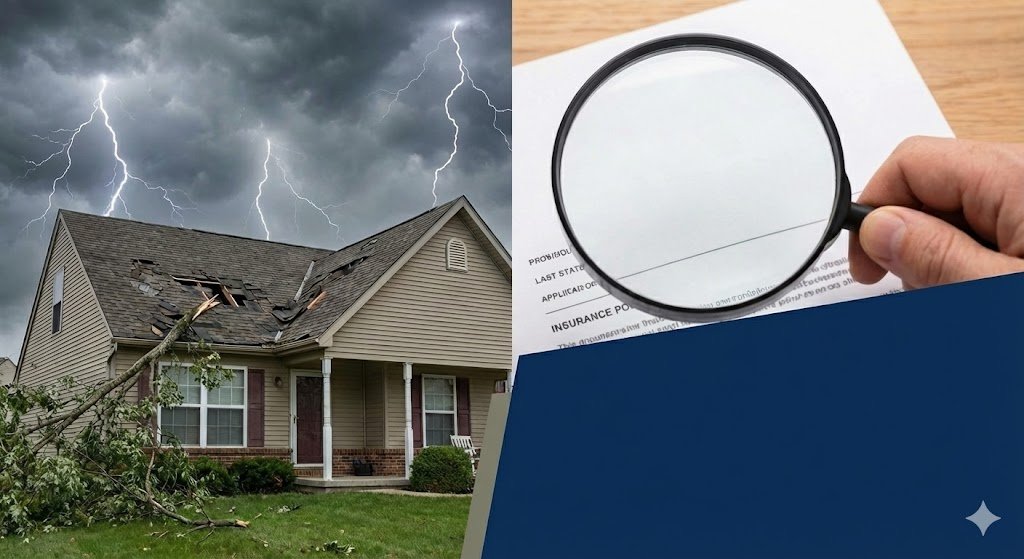
We are talking about the “Spring Storm” season. It’s that precarious window from April to June when the clash of cold Canadian air and warm Gulf moisture turns our skies into a volatile mixing bowl. We don’t just get rain; we get straight-line winds that can snap century-old oaks. We don’t just get thunder; we get hail the size of golf balls (or worse, baseballs). And, of course, we live in the northern alley of tornado country.
When the sirens sound, your first thought is the safety of your family. Your second thought, usually once the “all clear” is given, is your home. specifically, your roof. It is your home’s first line of defense, taking the absolute brunt of nature’s fury.
Most homeowners operate under a comforting assumption: “I have home insurance. If a storm destroys my roof, the insurance company will buy me a new one.”
Ten years ago, that assumption was largely correct. Today, however, that statement is filled with dangerous caveats. The insurance landscape has shifted dramatically in response to the increasing frequency and severity of Midwest storms. If you haven’t reviewed your policy in the last few years, you might be walking into this storm season with a false sense of security.
At Fallon Insurance Agency, we believe an educated homeowner is a protected homeowner. This guide will peel back the layers of “standard” roof coverage to reveal the gaps that could leave you footing a bill for thousands of dollars.
The Standard Roof Coverage Myth
The term “standard homeowners policy” is becoming increasingly misleading. There is no longer a universal standard. As insurance carriers hemorrhage money from massive hail claims across the Midwest (which has been dubbed “Hail Alley”), they have tightened their belts. They haven’t necessarily stopped covering roofs, but they have changed how they cover them.
The three biggest traps for MN and WI homeowners are:
- Actual Cash Value (ACV) vs. Replacement Cost (RCV)
- The Percentage Deductible
- The “Cosmetic Damage” Exclusion
Let’s break these down, because understanding them could save you the cost of a new car.
Trap #1: The Depreciation Disaster (ACV vs. RCV)
This is the single most significant factor in whether your roof claim is a relief or a financial burden.
Replacement Cost Value (RCV) is the “gold standard.” If your roof is destroyed, the insurance company pays what it costs today to replace it with brand-new materials of like kind and quality, minus your deductible. If a new roof costs $20,000, and your deductible is $1,000, they pay $19,000. Simple.
Actual Cash Value (ACV) is a different beast entirely. ACV pays you the value of your roof at the time of the loss. In other words, they deduct for depreciation.
The Scenario: Imagine you live in a beautiful home in Hudson, WI. Your asphalt shingle roof is 15 years old. It’s in decent shape, but it’s halfway through its 30-year life. A massive hailstorm shreds the shingles. A roofer quotes you $20,000 for a full replacement.
- If you have RCV Coverage: The insurer writes a check for roughly $19,000 (minus deductible). You get a new roof.
- If you have ACV Coverage: The adjuster says, “This roof was 50% through its life. Therefore, we are only paying for the remaining 50% of its value.” They take the $20,000 replacement cost and subtract 50% depreciation ($10,000). They then subtract your $1,000 deductible.
- The Check You Get: $9,000.
- The Bill You Owe the Roofer: $20,000.
- Your Out-of-Pocket Cost: $11,000.
The “Gotcha” Clause: Many modern policies have a “Roof Surfacing Amendment” or a “Step-Down” provision. This means your policy starts as RCV, but once your roof hits a certain age (often 10, 15, or 20 years), it automatically switches to ACV. You might not even get a notification letter; it’s just in the fine print of your renewal. In the harsh climate of Minnesota, where freeze-thaw cycles age roofs prematurely, this is a critical detail.
Trap #2: The Deductible Surprise (Flat vs. Percentage)
For decades, most homeowners had a flat deductible—usually $500 or $1,000. Regardless of whether your house burned down or a window broke, you paid that amount.
Because wind and hail claims are so frequent and expensive in the Midwest, insurers have introduced Percentage Deductibles specifically for wind and hail.
Instead of a flat $1,000, your deductible is set at 1% or 2% of your home’s insured value (Coverage A).
do the math: If your home is insured for $400,000 (a modest replacement cost for many homes in the Twin Cities metro or lake areas):
- 1% Deductible: You pay the first $4,000.
- 2% Deductible: You pay the first $8,000.
We have seen homeowners shocked to learn that they essentially have no coverage for “minor” storm damage. If a storm causes $6,000 worth of damage to your siding and gutters, and you have a 2% deductible ($8,000), the insurance company pays zero. You are 100% responsible for the repairs.
This shift often happens at renewal. An insurer might say, “We can keep your premium the same if we switch you to a 1% wind/hail deductible.” It sounds like a good deal until the sky turns green and the ice starts falling.
Trap #3: The “Cosmetic Damage” Exclusion
This is a newer trend, but it is spreading fast, especially affecting homeowners with metal roofs (which are popular on cabins and modern farmhouses) or high-end architectural shingles.
The exclusion states that the insurance company will not pay for damage that is “cosmetic only.”
What does that mean? If hail pummels your metal roof and leaves it looking like the surface of a golf ball—dented, dimpled, and ugly—but it doesn’t actually leak, the insurer can deny the claim.
- The Insurer’s Argument: “The roof is still shedding water. It is performing its function. We insure for function, not aesthetics.”
- The Homeowner’s Reality: Your $50,000 metal roof now looks terrible. Your home’s curb appeal is destroyed. If you try to sell the house, the buyer will demand a new roof or a massive price reduction. Furthermore, those “cosmetic” dents can micro-fracture the coating, leading to premature rust and failure three years down the road—long after the claim window has closed.
If you have a metal roof in MN or WI, you must check if your policy has a Cosmetic Damage Exclusion. If it does, you are effectively self-insuring the appearance of your home.
Trap #4: The “Matching” Problem
Siding and roofing materials fade over time. Styles are discontinued. What happens if a storm rips the siding off the north side of your house, but the south side is untouched?
The insurance company agrees to replace the damaged north side. But the new vinyl is bright and vibrant, while your old south-side vinyl is faded and chalky. Or worse, the specific shingle color you have isn’t made anymore.
- Standard Coverage: Often only pays to replace the damaged area. You are left with a patchwork house that looks like a checkerboard.
- Matching Endorsement: This is an optional add-on that requires the insurer to replace the undamaged portions of the siding or roof if a reasonable visual match cannot be found. This ensures your home looks uniform and maintains its value.
Why Midwest Roofs Are Different
Why are insurers so tough on us? Because our roofs go through war.
In the south, a roof just deals with heat and rain. In Minnesota and Wisconsin, a roof deals with thermal shock. In February, it might be -20°F at night. By noon, the sun hitting a dark shingle can raise its surface temperature to 60°F or higher. That is an 80-degree swing in 12 hours. This expansion and contraction makes shingles brittle.
When a spring storm hits in May, it might drop hail on shingles that have just spent 6 months frozen solid. Brittle asphalt cracks easier. Granules (the sandpaper-like stuff on top that protects the waterproofing) get blasted off. Once the granules are gone, UV rays eat the asphalt, and the roof fails.
This unique climate is why generic, online “instant quote” policies are so dangerous for us. They are often underwritten by algorithms that don’t account for the brutality of a Wisconsin winter followed by a Minnesota spring. They give you the cheapest price by stripping away the coverage you actually need (like RCV on older roofs).
Your Pre-Season Checklist
The snow is melting. The storms are coming. Here is what you need to do now, before the first siren wails.
1. The Paperwork Review Dig out your declaration page. Look for these codes or phrases:
- ACV (Actual Cash Value) specifically listed next to “Roof” or “Wind/Hail.”
- Wind/Hail Deductible: Is it a dollar amount ($1,000) or a percentage (1%, 2%)?
- Cosmetic Damage Exclusion: Look for this in the endorsements section.
2. The “Line of Sight” Check Do you have the “Matching of Undamaged Materials” endorsement? If you have vinyl siding, this is non-negotiable.
3. The Physical Inspection (From the Ground!) Grab a pair of binoculars. You are looking for:
- Lifted shingles: Tabs that are flapping or don’t lay flat.
- Bald spots: Areas where the black asphalt is showing through the colored granules.
- Loose flashing: The metal strips around your chimney or vents. If these are loose, wind will rip them right off.
4. Tree Trim Spring storms bring wind. Wind brings down branches. If you have an oak tree hanging over your master bedroom, call an arborist now. “Mechanical damage” (a tree falling on your house) is covered, but it’s a terrifying mess you want to avoid.
The Fallon Difference: We Live Under the Same Clouds
At Fallon Insurance Agency, we don’t just sell policies; we protect neighbors. We drive the same roads, watch the same weather forecasts, and worry about the same storms.
We know that a “cheap” policy isn’t cheap if it leaves you with a $15,000 bill after a hailstorm.
When you work with us, we run a comprehensive coverage audit. We look at the age of your roof and honestly tell you if you are eligible for Replacement Cost coverage. If you aren’t, we explain exactly what that means so you aren’t blindsided. We check for the Matching Endorsement. We help you choose a deductible that balances your monthly budget with your emergency savings.
Don’t let a spring storm wash away your savings. The best time to fix your coverage is when the sun is shining.
Is Your Roof Ready for the Rumble?
If you are unsure about your wind/hail deductible or whether your roof has an ACV exclusion, let us look at it for you. It costs nothing to check, but it could save you everything.
Contact Fallon Insurance Agency Today
Secure your home. Protect your wallet. Enjoy the spring.