

Understanding Commercial Auto Insurance MN Requirements
Running a business in Minnesota means dealing with more than just snowy roads and construction season. You also have to meet specific legal requirements for your vehicles. In Minnesota, the law is clear: every vehicle, whether it’s a personal car used for errands or a truck hauling machinery to a site in St. Paul, must have a minimum amount of auto liability insurance coverage.
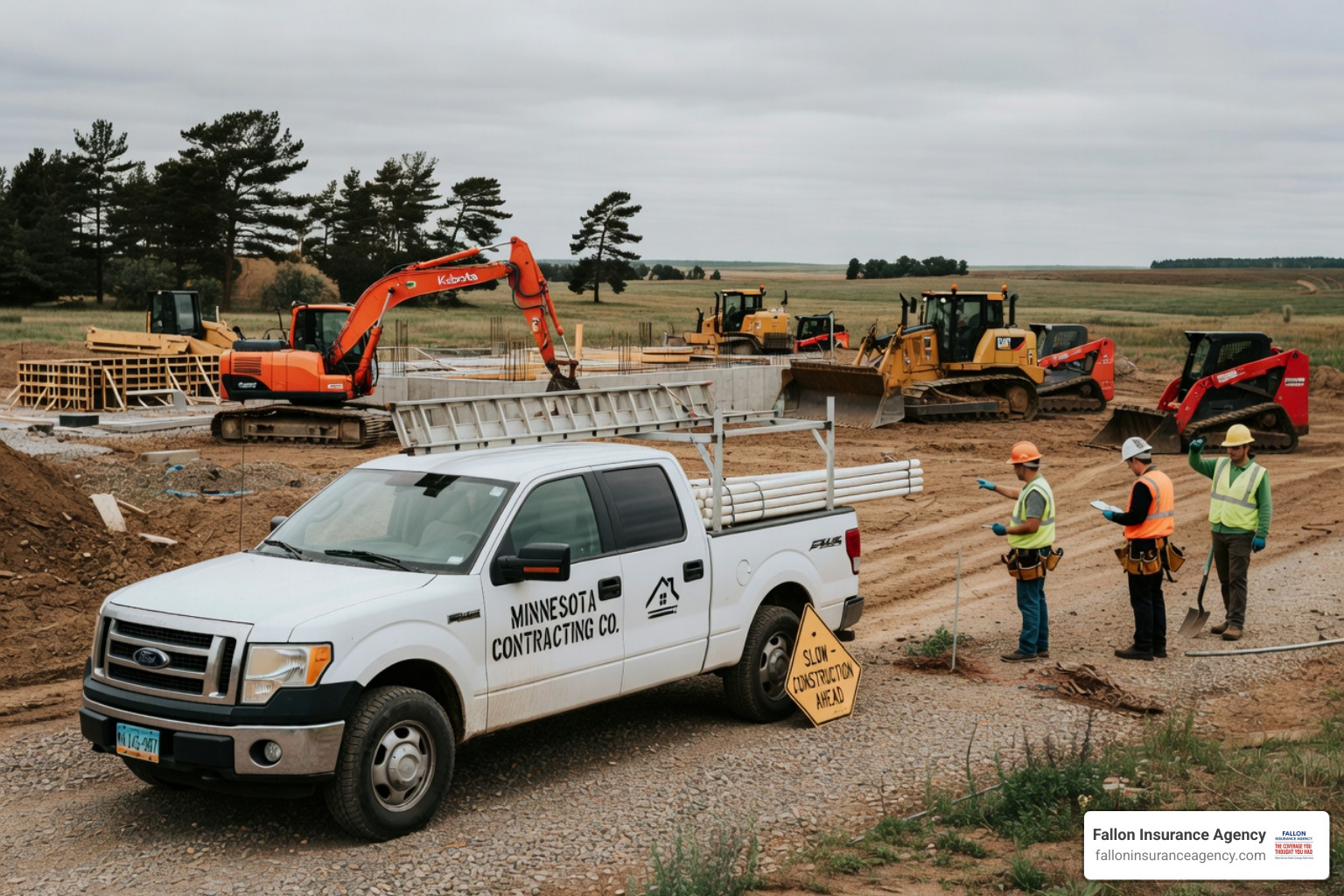
For a standard commercial auto insurance MN policy, the state-mandated “split limits” are 30/60/10. Here is the breakdown:
- $30,000 Bodily Injury Liability per person: This covers medical bills or legal costs for one person injured in an accident where your business vehicle is at fault.
- $60,000 Bodily Injury Liability per accident: This is the total amount available for everyone injured in a single accident.
- $10,000 Property Damage Liability: This pays for damage your vehicle causes to someone else’s property—like their car, a fence, or a building.
While these are the legal minimums, we often tell our clients at Fallon Insurance Agency that these limits are too low for most businesses. If your van slides on ice in Rochester and hits a luxury SUV, $10,000 in property damage will be gone instantly. We specialize in auto-insurance-minnesota and usually recommend much higher limits so one accident doesn’t wipe out your company.
| Coverage Type | MN State Minimum | Recommended Business Limit |
|---|---|---|
| Bodily Injury (Per Person) | $30,000 | $100,000 – $500,000 |
| Bodily Injury (Per Accident) | $60,000 | $300,000 – $1,000,000 |
| Property Damage | $10,000 | $100,000+ |
| Combined Single Limit (CSL) | N/A | $1,000,000 |
Minnesota’s No-Fault Law and PIP
Minnesota is a “no-fault” state, which can be confusing. It doesn’t mean no one is at fault; it means if you or your employees are injured, your own insurance pays for medical bills first, regardless of who caused the crash.
This is handled through Personal Injury Protection (PIP). In Minnesota, you must carry at least $40,000 in PIP coverage per person. This is split into $20,000 for medical expenses and $20,000 for things like lost wages or “essential services” (hiring help for tasks the injured person can’t do, like mowing the lawn).
When we review auto-insurance policies, we explain that PIP is your first line of defense. It makes sure your team gets medical care right away without waiting for a legal battle over who was at fault.
Penalties for Driving Without Commercial Auto Insurance MN
Skipping insurance in Minnesota is a major risk. If you’re caught driving a business vehicle without coverage, you’ll face penalties for not carrying auto insurance.
The consequences are serious:
- Fines: Expect a fine of at least $200.
- License Suspension: Your driver’s license can be suspended for up to 30 days.
- Registration Revocation: The state can take away the vehicle’s registration.
- Community Service: A judge might order community service.
- SR-22 Filing: You may need to file a “certificate of insurance” with the state for several years, which makes your premiums much more expensive.
Who Needs a Commercial Policy in Minnesota?
A common myth we hear is, “I’m just a one-man shop, I don’t need a commercial policy.” But insurance companies see it differently. If you use your vehicle to make money, you likely need a commercial policy.
If your business involves any of the following, minnesota-business-insurance-farmers-insurance-agency is necessary:
- Transporting Goods or Equipment: Like a florist delivering in Edina or a carpenter hauling tools to a job site in Cannon Falls.
- For-Hire Transport: If you’re paid to move people or property.
- Heavy Vehicles: Any vehicle over 10,000 lbs or those needing a Minnesota Department of Transportation (MnDOT) number.
- Specialized Equipment: Vehicles with attachments like cranes, snowplows, or catering ovens.
You can check if your operation needs federal filings by checking your USDOT number or docket number with the FMCSA.
Using Personal Vehicles for Work Tasks
If an office assistant uses their own car to drop off mail or pick up lunch for a meeting, your standard business policy might not cover it. This is where Hired and Non-Owned Auto (HNOA) coverage comes in.
HNOA protects your business when you or your employees drive vehicles the business doesn’t own (like rentals or personal cars) for work. Without it, if an employee causes an accident on a work errand, the victim’s lawyer could sue both the employee and your business. We consider HNOA one of those business-insurance-essential-components every small business owner should have.
Common Industries Requiring Coverage
We work with many industries across st-paul-minnesota and minneapolis-minnesota. The risk for a bakery van is different from a tow truck, but both need the right protection.
Common industries needing commercial auto insurance MN include:
- Construction & Trades: Electricians, plumbers, HVAC techs, and landscapers.
- Real Estate: Agents driving clients to properties.
- Professional Services: Consultants traveling to client sites.
- Wholesale & Distribution: Moving products between warehouses.
- Food Services: Catering companies and food trucks.
Coverage Options and Cost Factors
On average, commercial auto insurance MN costs about $135 per month, but that’s just a starting point. At Fallon Insurance Agency, we don’t just look at the price; we look at the potential risks.
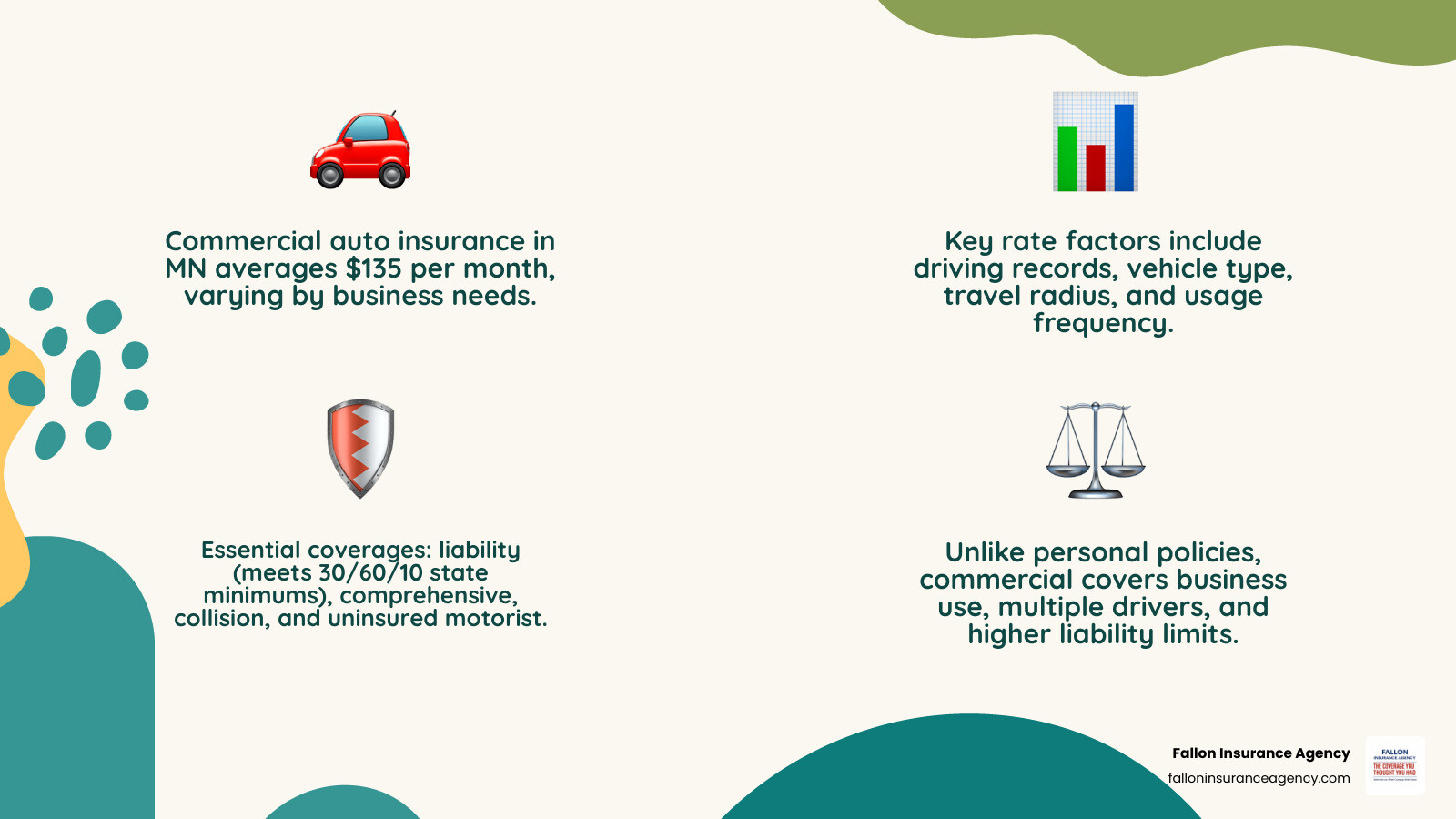
Your policy can include several types of protection:
- Liability: The state minimums we discussed.
- Comprehensive: Covers damage from things other than accidents (theft, fire, or hitting a deer on Highway 52).
- Collision: Covers damage to your vehicle if you hit another car or object.
- Uninsured/Underinsured Motorist: Protects you if you’re hit by someone with little or no insurance.
- Bobtail Coverage: For truckers driving their tractor without a trailer.
- Cargo Insurance: Protects the items you’re hauling.
Ways to Lower Your Commercial Auto Insurance MN Premiums
While we focus on protection first, we also want to help you find value. There are ways to manage the cost of your business-insurance:
- Paid-in-Full: Many carriers offer a discount (up to 13%) if you pay the annual premium upfront.
- Bundling: Combining your auto policy with General Liability or Property insurance can save an average of 12%.
- Higher Deductibles: Raising your deductible from $500 to $1,000 can lower your premium, as long as you can afford the out-of-pocket cost if you have a claim.
- Safety Programs: Having a formal safety program for your drivers can lead to lower rates over time by keeping your claims history clean.
If you aren’t sure if you’re getting the best value, Find an agent who can compare multiple carriers for you.
Factors That Impact Your Monthly Rate
Insurance companies look at several factors to determine your rate:
- Location: Driving in Minneapolis traffic is riskier than driving in rural areas near Hudson or Eau Claire.
- Travel Radius: Local delivery routes usually have lower premiums than long-haul operations.
- Vehicle Weight: Larger trucks cause more damage, so they cost more to insure.
- Driving History: This is a big factor. Speeding tickets or at-fault accidents will cause rates to go up.
Frequently Asked Questions about Minnesota Business Vehicles
How does commercial auto differ from personal auto insurance?
The main difference is the limit of liability. Business policies often offer limits up to $1 million or more because businesses are more likely to be sued for larger amounts. Also, personal policies usually exclude delivery or for-hire work. If you use a personal policy for business, the insurance company will likely deny your claim.
What is Hired and Non-Owned Auto (HNOA) coverage?
Think of this as protection for your business liability when you don’t own the vehicle. If you rent a car for a business trip to Madison or if an employee uses their own car to pick up supplies, HNOA protects your business from a lawsuit if an accident happens.
Does my personal policy cover business deliveries?
Generally, no. Most personal auto policies in Minnesota have a “delivery exclusion.” This applies to pizza delivery, courier services, and ridesharing. If you use your car for these tasks without a commercial policy, you are essentially driving without insurance during those hours.
Conclusion
At the end of the day, commercial auto insurance MN is more than just a legal requirement – it’s about protecting what you’ve built. Whether you are operating out of Rochester, St. Paul, or Cannon Falls, the risks on the road are the same.
At Fallon Insurance Agency, we don’t use a “one-size-fits-all” approach. We look for the gaps that others might miss. We want to make sure that when you’re out there growing your business, you have the peace of mind that a single patch of black ice won’t take it all away.
If you’re ready for a straightforward risk review and a clear look at your coverage, we’re here to help. Get a Minnesota Business Insurance Quote today and let’s make sure your business is actually protected.

Leland Fallon
Leland Fallon is the Founder of Fallon Insurance Agency, serving Minnesota and Wisconsin families and business owners with personalized home, auto, commercial, and life insurance solutions. His mission is simple: protect what matters most. With a focus on clear guidance, strong coverage, and long-term relationships, Leland helps clients make confident insurance decisions — not rushed ones.