



Understanding Minnesota’s Rising Home Insurance Landscape
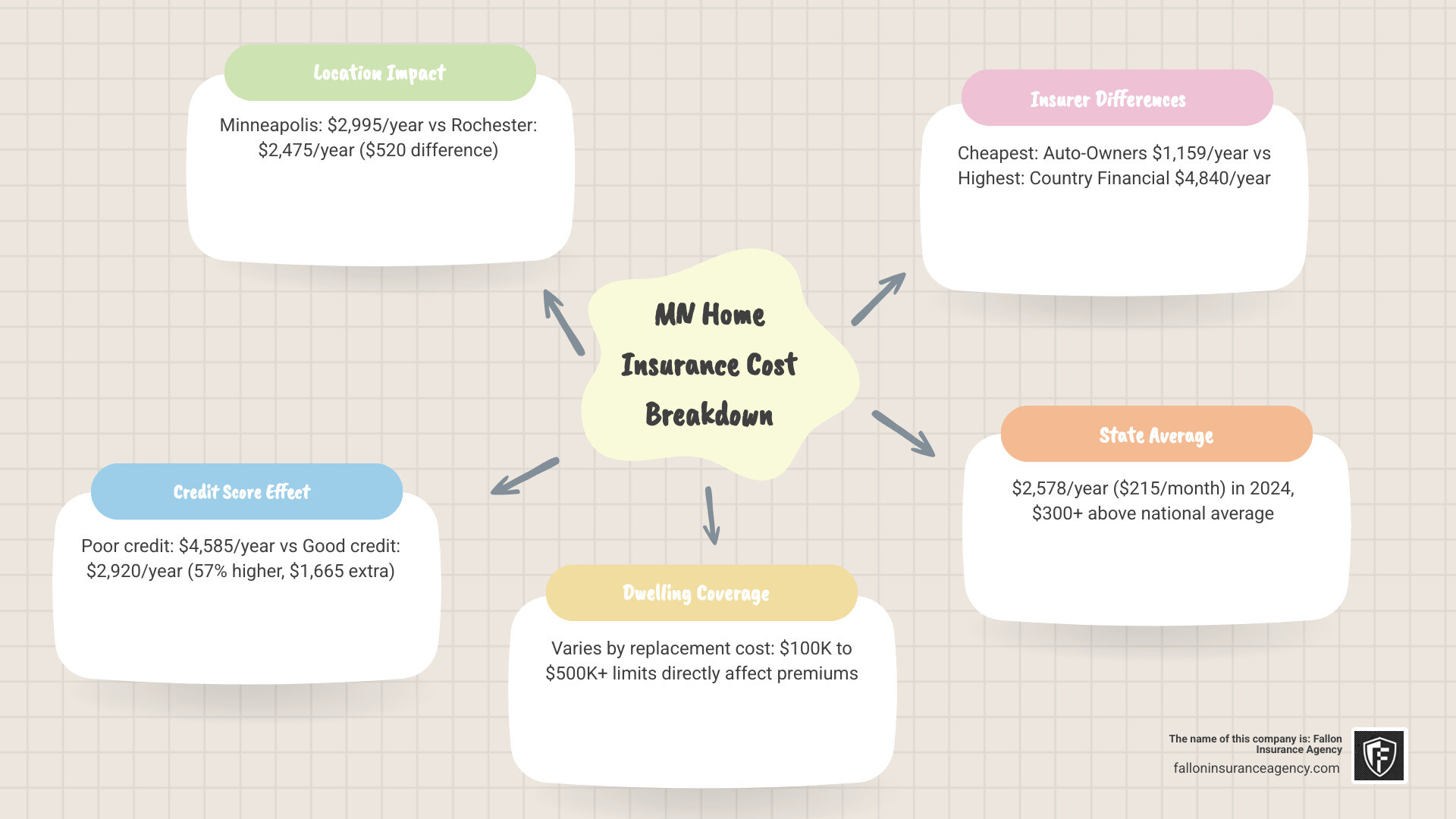
The average cost of home insurance in Minnesota ranges from $1,829 to $2,920 annually depending on the data source, with most recent 2024 estimates settling around $2,578 per year or $215 per month. This puts Minnesota premiums roughly $300 higher than the national average of $2,285, though some older data shows rates slightly below national benchmarks.
Quick Facts: Minnesota Home Insurance Costs
- State Average: $2,578/year ($215/month) in 2024
- Compared to National: $300+ above average
- Minneapolis: $2,995/year
- Rochester: $2,475/year
- Recent Increase: Projected 15% jump to $4,058 annually
- Cheapest Insurer: Rates as low as $1,159/year
- Credit Impact: Poor credit raises rates 57% ($4,585 vs. $2,920)
If you’ve been watching your home insurance bill creep upward year after year, you’re not imagining things. Minnesota homeowners have faced significant rate increases driven by severe weather events—particularly hail storms damaging roofs—along with rising construction costs and labor shortages. These factors have pushed premiums up by over 21% in recent years, with some projections showing another 15% increase on the horizon.
The good news? Understanding what drives your premium is the first step toward controlling it. Location matters—homeowners in Rochester typically pay $520 less annually than those in Minneapolis. Your credit score has an even bigger impact, with poor credit costing you over $1,600 more per year. And choosing the right insurance company can save you hundreds or even thousands, since rates for identical coverage vary from $1,159 to $4,840 depending on the carrier.
I’m Leland Fallon, and through my work serving homeowners across Minnesota and Wisconsin, I’ve helped hundreds of families navigate the confusing landscape of average cost of home insurance in Minnesota to find proper protection without overpaying. I’ve seen how the right coverage strategy—not just the cheapest price—protects families when unexpected disasters strike.
What is the Average Cost of Home Insurance in Minnesota?
When we look at the data for 2024 and 2025, the average cost of home insurance in Minnesota has become a moving target. While some national databases suggest an average of $1,847, more localized and recent reporting from the insurance industry indicates that the typical Minnesota homeowner is now paying closer to $2,578 annually. This breaks down to approximately $215 per month.
Compared to our neighbors in the Midwest, Minnesota sits in a bit of a “high-pressure system.” We generally pay more than homeowners in Wisconsin, where the average sits around $1,950, and more than those in Iowa ($2,100). However, we are often more affordable than states like Nebraska or Kansas, which face even more frequent “Tornado Alley” activity.
| State | Average Annual Premium | Monthly Cost |
|---|---|---|
| Minnesota | $2,578 | $215 |
| Wisconsin | $1,950 | $162 |
| Iowa | $2,100 | $175 |
| North Dakota | $2,300 | $191 |
| National Average | $2,285 | $190 |
It is important to remember that these are just averages. At Fallon Insurance Agency, we often find that homeowners who haven’t shopped their rates in three or more years are paying significantly more than the state average. If you want to dive deeper into how these numbers are calculated, check out our Home Insurance in Minnesota: A Comprehensive Guide to Smarter Protection.
Comparing the Average Cost of Home Insurance in Minnesota by City
Geography plays a massive role in your premium. If you live in a densely populated area or an area prone to specific weather patterns, your bill will reflect that risk.
- Minneapolis: As the largest city, Minneapolis often sees the highest rates, averaging $2,995 per year. This is roughly 16% higher than the state average. Higher crime rates and the density of homes (which increases fire spread risk) contribute to this.
- St. Paul: Close behind Minneapolis, St. Paul homeowners pay an average of $2,225 to $2,900 depending on the specific neighborhood and the age of the housing stock.
- Rochester: Homeowners in Rochester enjoy some of the most competitive rates in the state, averaging $2,475 per year. The city’s excellent fire protection services and slightly different weather exposure help keep these costs down.
- Duluth: In Duluth, the average cost is approximately $1,722 to $1,800. While the winters are harsh, the city faces fewer catastrophic hailstorms than the southern half of the state, which keeps premiums lower.
How Dwelling Coverage Affects the Average Cost of Home Insurance in Minnesota
The “Dwelling Coverage” (Coverage A) is the part of your policy that pays to rebuild your home if it’s destroyed. This is not the same as your home’s market value. In Minnesota, construction costs have skyrocketed, meaning it often costs more to rebuild a home than it would to buy it on the open market.
For a standard $300,000 dwelling limit, you might pay that $2,578 average. However, if you have a larger home with a $500,000 limit, your premium could easily jump to $3,662 or more.
We always recommend looking at the construction materials. A home with a complex roofline, custom masonry, or historic finishes will cost more to insure because the “replacement cost” is much higher. You can learn more about how to calculate these needs in our Ultimate Guide to Home Insurance.
Why Minnesota Homeowners Insurance Rates are Increasing
If you’ve opened your renewal notice recently and felt a bit of “sticker shock,” you aren’t alone. Rising insurance rates are a reality across the Gopher State.
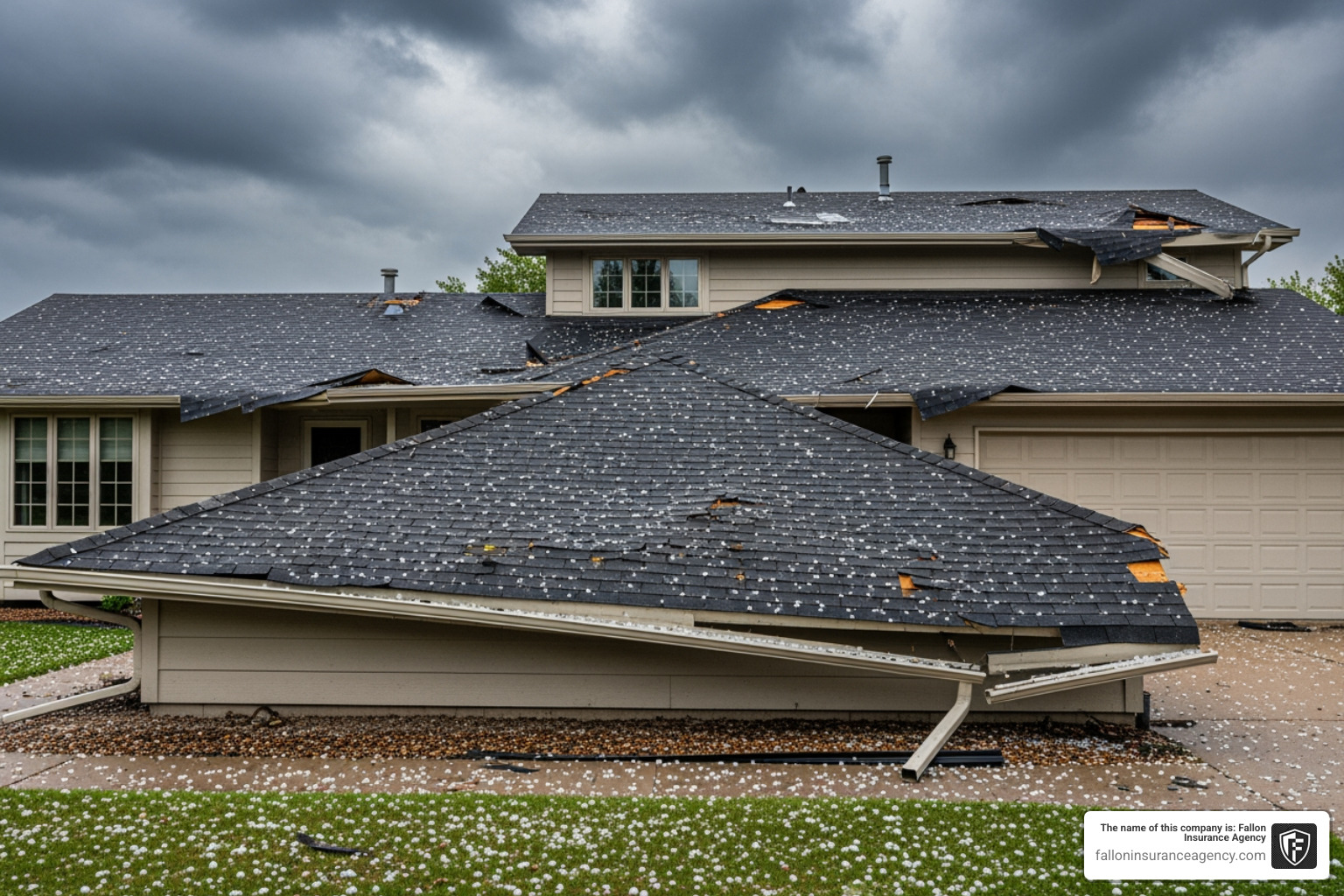
The primary culprit? Severe weather. Minnesota has seen a dramatic increase in “convective storms”—the kind that bring heavy wind and massive hail. In fact, hail damage to roofs is the #1 reason for insurance claims in Minnesota. When insurance companies pay out billions for roof replacements across the Twin Cities metro, they eventually have to raise premiums to cover those losses.
Beyond the weather, we are dealing with:
- Reinsurance Costs: Insurance companies buy their own insurance (called reinsurance). Global climate events have made reinsurance more expensive, and those costs are passed down to you.
- Construction Inflation: The cost of lumber, shingles, and labor has risen significantly. Replacing a roof that cost $10,000 five years ago might cost $18,000 today.
- Labor Shortages: A lack of skilled tradespeople in the Midwest means repairs take longer and cost more, driving up “Loss of Use” claims where the insurance company pays for you to live elsewhere while your home is fixed.
Key Factors Determining Your Individual Premium
Every homeowner is unique, and your neighbor might pay a completely different rate than you do for the exact same house. Insurance companies use complex algorithms to determine risk.
The Minnesota Commerce Department’s Insurance Division oversees these rating factors to ensure they are fair, but carriers still have a lot of leeway. Some of the biggest factors include:
- The Age of the Home: Older homes often have outdated electrical, plumbing, or heating systems, which increases the risk of fire or water damage.
- Roof Type: This is huge in Minnesota. An impact-resistant roof might get you a significant discount, while an aging asphalt shingle roof might result in a surcharge or even a “rejection” from some carriers. Check out Why Standard Roof Coverage Is Not Enough to see why the “fine print” on your roof matters.
- Claims History: If you’ve filed two or more claims in the last three years, your premium could rise by 25% to 40%. Conversely, staying claim-free for five years can earn you a “claim-free discount” of 10% to 15%.
The Impact of Credit Scores on Minnesota Rates
One factor that surprises many people is the impact of their credit-based insurance score. In Minnesota, insurers are legally allowed to use your credit history to help predict the likelihood of you filing a claim.
The data is startling: a homeowner with poor credit in Minnesota pays an average of $4,585 annually, while someone with excellent credit pays just $2,920 for the same home. That is a 57% difference. Maintaining a solid credit score isn’t just good for your mortgage; it’s essential for keeping the average cost of home insurance in Minnesota manageable for your budget.
Regional Risks and Perils in the Gopher State
Living in Minnesota means preparing for all four seasons, and each brings its own insurance risks.
- Winter Storms & Ice Dams: When snow melts and refreezes at the edge of your roof, it can back up under the shingles and cause massive water damage inside your walls.
- Tornadoes: While not as frequent as in “Tornado Alley,” southern and central Minnesota still face significant tornado risks every spring and summer.
- Wildfires: In northern Minnesota and even some wooded suburbs, wildfire risk is a growing concern that can impact your ability to get certain types of coverage.
Standard Coverage vs. Essential Add-Ons for Minnesotans
A standard Minnesota homeowners policy (usually an HO-3 form) includes several core components:
- Dwelling Protection: Covers the structure of your home.
- Other Structures: Covers detached garages, sheds, or fences.
- Personal Property: Covers your belongings (clothes, electronics, furniture).
- Personal Liability: Protects you if someone is injured on your property and sues you.
- Medical Payments: Covers minor medical bills for guests injured at your home, regardless of fault.
However, “standard” isn’t always enough. For example, if you own a seasonal property, you need to ensure it’s protected during the months it sits empty. We’ve put together a guide on this: Is Your Cabin Covered for the Winter?
Why You Need Separate Flood Insurance
One of the biggest misconceptions we hear is: “I have home insurance, so I’m covered for floods.” This is false. Standard home insurance policies almost never cover flood damage.
In Minnesota, 40% of flood claims over the last 30 years have come from areas outside of high-risk flood zones. Whether it’s a rapid spring thaw or a massive summer downpour, water can find its way into your home. You should check the Flood Insurance resources from the state to see your risk level. Most homeowners need a separate policy through the NFIP (National Flood Insurance Program) or a private insurer to be truly protected.
Additional Living Expenses and Personal Property
If a fire or major storm makes your home uninhabitable, “Additional Living Expenses” (ALE) coverage is your best friend. It pays for hotel stays, restaurant meals, and other costs while your home is being repaired.
When it comes to your belongings, we always recommend Replacement Cost Coverage over “Actual Cash Value.”
- Actual Cash Value (ACV): Pays what your 5-year-old TV is worth today (which isn’t much).
- Replacement Cost: Pays what it actually costs to buy a brand-new TV of similar quality.
Also, be wary of the “Check the Box” approach to insurance. High-value items like jewelry, firearms, or fine art often have very low limits (sometimes as low as $1,000 total). If you have an engagement ring worth $5,000, you need a “rider” or “endorsement” to cover it fully. Read more about the Risks of ‘Check the Box’ Home Insurance to avoid these common traps.
Strategies to Lower Your Minnesota Home Insurance Costs
While the average cost of home insurance in Minnesota is rising, you have several tools to fight back and lower your bill.
- Bundle Your Policies: This is the single most effective way to save. Bundling your home and auto insurance with the same carrier can save you between $400 and $1,021 per year (roughly 15% to 25%).
- Raise Your Deductible: If you can afford to pay more out-of-pocket if a claim occurs, raising your deductible from $500 to $2,500 can lower your premium by up to 30%.
- Install Protective Devices: Deadbolts, smoke alarms, and home security systems often trigger small but helpful discounts. Some carriers even offer discounts for “smart” water leak detectors.
- Pay Annually: Many insurance companies charge a “convenience fee” for monthly payments. Paying your full premium once a year can save you 3% to 5%.
- Stay Claim-Free: Avoid filing “small” claims (like a $1,200 repair when your deductible is $1,000). The long-term surcharge on your premium will cost more than the repair itself.
Frequently Asked Questions about Minnesota Home Insurance
Is homeowners insurance legally required in Minnesota?
Technically, no. The State of Minnesota does not have a law requiring you to carry home insurance. However, if you have a mortgage, your lender will absolutely require it. They want to protect their investment. Even if your home is paid off, going without insurance is incredibly risky; you are essentially gambling your largest financial asset against a single lightning strike or kitchen fire.
How much can I save by bundling home and auto insurance in MN?
As mentioned earlier, the savings are significant. Most Minnesota homeowners see a reduction of 15% to 25% on their total insurance bill when they bundle. Beyond the cost, it also makes your life easier by having a single point of contact and potentially a single deductible if a storm damages both your car and your home. You can start exploring these options on our Home Insurance page.
Does standard MN home insurance cover water backup?
Usually, no. Standard policies cover “sudden and accidental” water damage (like a burst pipe), but they do not cover water that backs up through sewers or drains, or water that overflows from a sump pump. This is a very common cause of basement flooding in Minnesota. You can—and should—add a “Water Backup and Sump Pump Overflow” endorsement to your policy. It’s usually quite affordable and can save you tens of thousands in cleanup costs.
Conclusion
Navigating the average cost of home insurance in Minnesota doesn’t have to be a solo mission. While the data shows that rates are higher here than in many other parts of the country, those numbers don’t have to be your numbers. By understanding the factors like credit scores, regional weather risks, and the importance of bundling, you can take control of your household budget.
At Fallon Insurance Agency, we specialize in providing smarter, affordable coverage that saves our clients thousands. Whether you are in Cannon Falls, Rochester, or across the border in Hudson or Eau Claire, we understand the specific needs of Midwest homeowners. We don’t just “check the box”—we build policies that actually work when you need them most.
Ready to see how your current premium stacks up? Don’t settle for “average” when you can have “expert.” Get a Quote today and let us help you find the protection you deserve.

Leland Fallon
Leland Fallon is the Founder of Fallon Insurance Agency, serving Minnesota and Wisconsin families and business owners with personalized home, auto, commercial, and life insurance solutions. His mission is simple: protect what matters most. With a focus on clear guidance, strong coverage, and long-term relationships, Leland helps clients make confident insurance decisions — not rushed ones.