

How a Defensive Driving Course Can Lower Your Car Insurance Bill
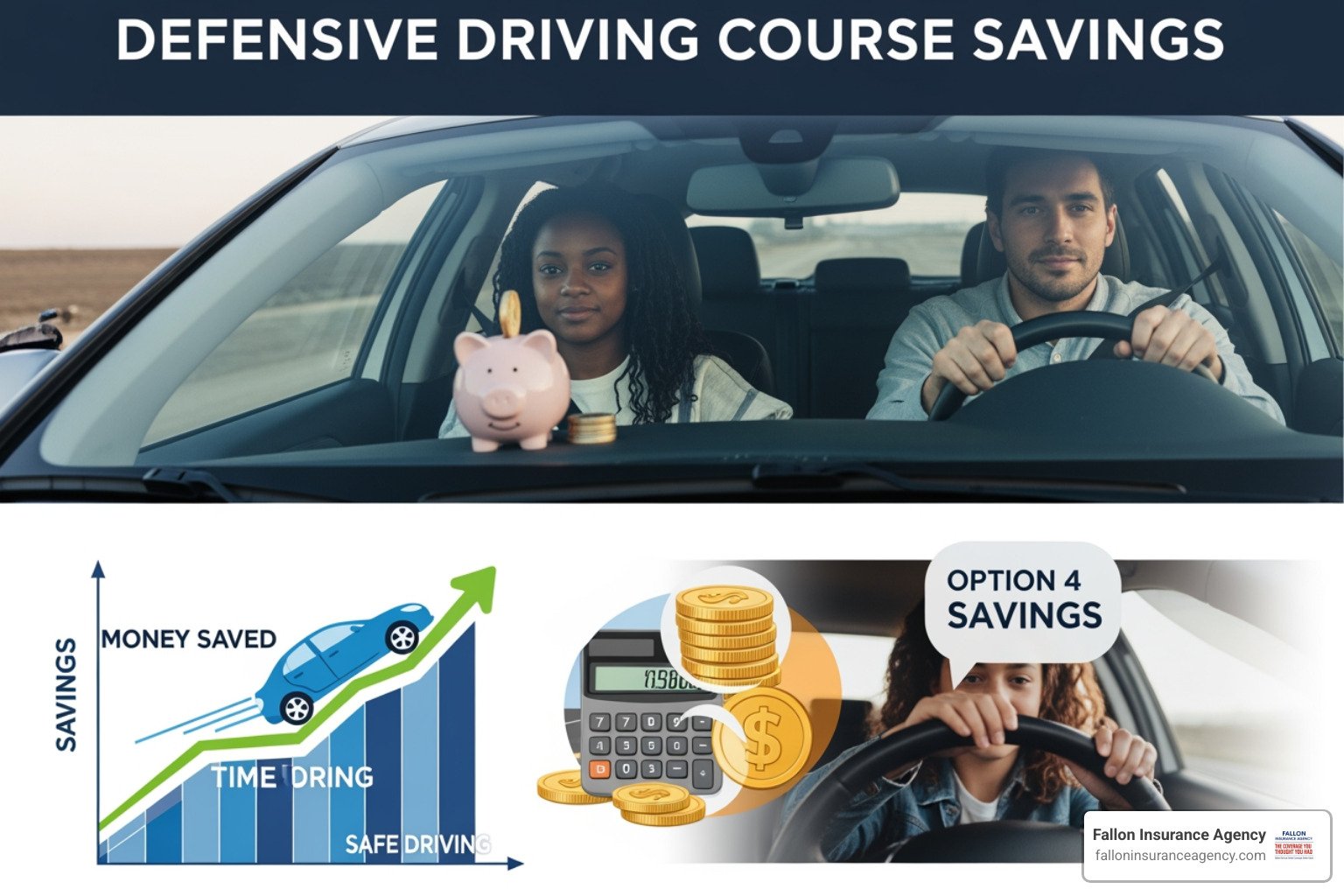
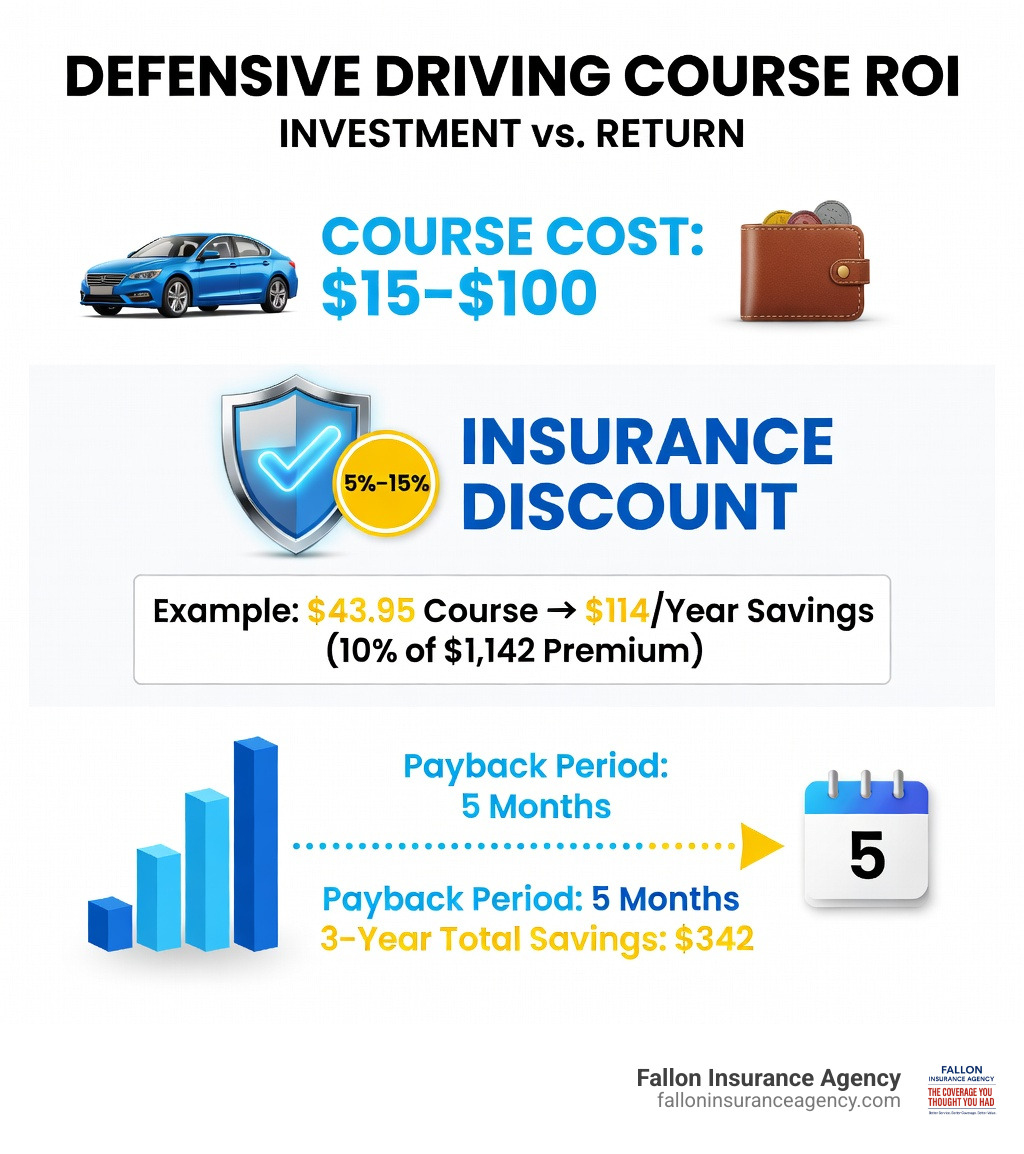
Defensive driving course savings are a practical way to lower your insurance costs, but the real benefit is staying out of an accident in the first place. Here is a direct look at how the costs and savings usually break down:
| What You Spend | What You Can Save | How Fast It Pays Off |
|---|---|---|
| $15–$100 (course cost) | 5%–15% off applicable premiums | As little as 5–7 months |
| Example: $43.95 course | $114.20/year (10% of $1,142 premium) | Paid back in 5 months |
| Example: $30.95 course | Savings on $1,637 premium (5% discount) | Paid back in 7 months |
Most courses pay for themselves within the first year, and the discount typically lasts for three years.
Taking a defensive driving course shows your insurance company that you are taking safety seriously. In 37 states, insurers are required by law to offer discounts to drivers who complete an approved course. These savings usually range from 5% to 15% depending on where you live and who your insurer is.
I’m Leland Fallon, founder of Fallon Insurance Agency. I’ve spent years helping Midwest families understand that insurance isn’t just about finding the lowest premium—it’s about making sure you have enough coverage to protect your home and your savings if something goes wrong. Let’s look at how these courses work and how to get the discount applied correctly.
What is a Defensive Driving Course and How Does it Work?
A defensive driving course is about learning to survive the mistakes of other drivers. While a standard driver’s ed class teaches you how to park and follow signs, defensive driving focuses on spotting trouble before it happens.
When we talk to our clients in Eagan, MN or Brookfield, WI, we explain that these courses are about hazard recognition. You learn to scan the road for threats, like a distracted driver drifting into your lane or a patch of black ice on a bridge in Hudson, WI.
Core Skills Taught in Defensive Driving
- Crash Avoidance: Understanding how to steer out of trouble when a car stops suddenly in front of you.
- Weather Strategies: Practical tips for handling Minnesota and Wisconsin winters.
- Reaction Time: How to manage distractions so you can act in time when a hazard appears.
These aren’t just boring videos. They are interactive programs designed to help you make better decisions behind the wheel. The National Safety Council (NSC) has used this curriculum to train millions of drivers to be more aware of their surroundings.
How the Savings Work
The main reason people take these courses is for the defensive driving course savings on their auto insurance. The discount usually applies to your Liability, Personal Injury Protection (PIP), and Collision premiums.
In Minnesota, you might save up to 12% on those parts of your bill. In Wisconsin, it’s often around 5%. While 5% might seem small, it adds up. If you pay $1,500 a year, a 5% discount saves you $75. Over three years, that’s $225. If the course cost you $30, you’ve come out ahead.
We often suggest using that extra $75 to increase your liability limits. Saving money is good, but having enough coverage to protect your house if you’re sued after a major accident is much more important. You can check the average car insurance cost in Wisconsin to see where your current rate stands.
Savings for Seniors and Mature Drivers
If you are 55 or older in Minnesota, the law requires insurance companies to give you a discount for completing an approved course. This is a mandatory 10% to 12% reduction that lasts for three years. For seniors in Rochester or Bloomington, this is a simple way to keep fixed costs down without cutting back on the coverage you need.
Just remember: the course must be voluntary. If a judge orders you to take a class because of a speeding ticket, you usually can’t use that same certificate to get an insurance discount.
State-Specific Discounts and Eligibility Requirements
Insurance is regulated at the state level, which means the rules in Woodbury, MN are different from the rules in Eau Claire, WI.
In Minnesota, the law is very driver-friendly regarding these discounts. If you are 55 or older, you are entitled to a discount after completing an approved 8-hour initial course, followed by a 4-hour refresher every three years. Many of our clients in Lakeville and Eagan use the Minnesota Safety Council for these programs.
In Wisconsin, the discounts are more often at the discretion of the insurance company rather than mandated by state law for all ages. However, almost every major carrier we work with at Fallon Insurance Agency offers a “Safe Driver” or “Defensive Driver” discount because they know educated drivers file fewer claims.
This is different from states like New Jersey, where the New Jersey MVC oversees specific driver programs that mandate insurance benefits. Other states have set high bars for savings as well, such as Arkansas and Delaware, which both mandate up to a 15% discount for qualifying drivers.
Common Eligibility Rules for Defensive Driving Course Savings
Before you sign up, check these common requirements:
- Clean Record: Some companies require you to have no at-fault accidents or major violations in the last 3-5 years to qualify for the additional defensive driving discount.
- Voluntary Completion: As mentioned, court-ordered courses for ticket dismissal usually don’t count for premium reduction.
- Renewal Periods: You can’t just take the course once and save forever. You’ll need to refresh your certification every three years.
- One Discount per Vehicle: Usually, the discount is tied to the driver. If you are the only driver on the policy but have three cars, the discount usually applies to the vehicle you primarily drive.
Online vs. In-Person: Choosing the Right Format
You don’t have to spend a Saturday morning in a cramped classroom anymore. Most drivers now choose online courses because they are more convenient.
Online Courses:
- Flexibility: You can work on it whenever you have time, which is helpful for busy families in Madison or Green Bay.
- Self-Paced: You can move through the sections at your own speed.
- Lower Cost: Online options are usually the most affordable way to get the discount.
In-Person Classes:
- Direct Learning: Some people prefer being able to ask an instructor questions face-to-face.
- Advanced Training: Some specialized courses offer hands-on training, like learning how to recover from a skid on a wet road. This is excellent practice for Midwest drivers.
Approved Providers
To get the defensive driving course savings, the provider must be state-approved. If they aren’t, your insurance company won’t accept the certificate. Common approved providers include:
- National Safety Council (NSC): Widely accepted by almost all insurers.
- AARP Smart Driver: Designed specifically for drivers age 50 and older.
- American Safety Council: Offers straightforward online programs in most states.
Once you finish, send a copy of your certificate to your agent. Don’t assume the school will do it for you.
Frequently Asked Questions about Defensive Driving
How much can I actually save on my car insurance?
While it varies, most drivers see a reduction of 5% to 10% on their liability and collision premiums. For a typical family policy, this could be anywhere from $60 to $150 per year. Over three years, that’s $180 to $450 in total defensive driving course savings.
How do I send my certificate to my insurance company?
If you are a client of ours, you can simply email a PDF or a photo of your certificate to us. If you deal with a national call center, you usually have to log into your policy portal and upload the document under the “Discounts” or “Documents” section.
Are there states where these discounts aren’t available?
Yes. Some states like Hawaii, Massachusetts, and Michigan do not have the same mandatory discount structures. However, in Minnesota and Wisconsin, you have a very high likelihood of finding a carrier that rewards this training.
Conclusion: Protection Matters More Than the Discount
At Fallon Insurance Agency, we believe insurance should be about real protection, not just finding the lowest price. A defensive driving course is a great way to save a few dollars, but its true value is helping you avoid a life-changing accident.
Saving 10% on your premium won’t help you if you are underinsured. Consider these real-world risks:
- Liability Lawsuits: If you cause a serious crash in Woodbury and your liability limits are too low, the other driver can sue you for your savings and even your home to cover their medical bills.
- Uninsured Drivers: If someone hits you and they don’t have insurance, you could be stuck paying for your own hospital stays and car repairs if your policy isn’t set up correctly.
- Total Losses: If your car is totaled and you don’t have the right coverage, you might find yourself struggling to buy a replacement vehicle with money you don’t have.
We talk to our clients about these “what if” scenarios because we want you to have no surprises if you ever have to file a claim. For Midwest families, insurance is about building a foundation that stays solid after a storm, a lawsuit, or a serious accident.
Your Next Steps
- Check Your Limits: Look at your current policy. Does your liability coverage actually protect your income and your home?
- Take the Course: If you’re 55+ in Minnesota, sign up for a class and send us the certificate to get your mandatory discount.
- Get an Honest Review: If you aren’t sure where your coverage stands, reach out to us. We will help you find the gaps in your policy before they cost you everything.
Manual review has been completed: y

Leland Fallon
Leland Fallon is the founder of Fallon Insurance Agency, dedicated to protecting families across the Midwest. His mission is simple: make sure no family ever finds out they were underinsured after it’s too late. By uncovering hidden coverage gaps, he ensures his clients are fully protected not just carrying a policy.